


How Can Gangnam Double Layer Pallet Mold Shape Better Designs
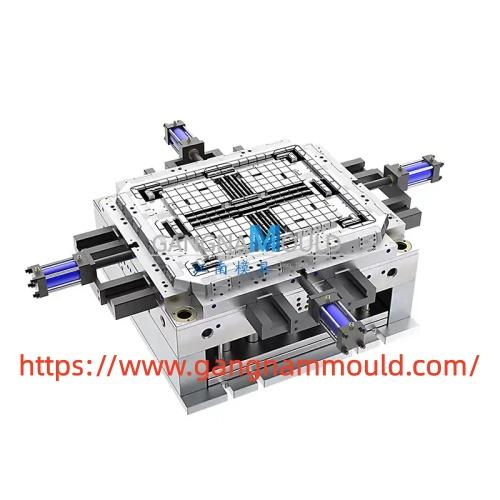
Double Layer Pallet Mold is an important consideration for manufacturers developing reusable plastic platforms for industrial storage, transportation, and warehouse operations. As supply chains become increasingly connected, businesses need handling products that fit different working environments and equipment systems. The design of these products involves more than creating a flat surface. Structural organization, material characteristics, manufacturing methods, and everyday usability all influence the final result.
Industrial handling products are used throughout manufacturing facilities, distribution centers, storage areas, and transportation networks. Their daily responsibilities can vary considerably. Some are used to organize packaged goods in warehouses, while others support the movement of components between production stations. Certain applications also require products that can be handled from different directions or used on both sides. Understanding these working conditions is an important starting point for product development.
Material selection deserves careful attention because different plastics behave differently during manufacturing and everyday use. Polypropylene is commonly considered for applications requiring a balance between rigidity and flexibility. High density polyethylene is another material used in industrial handling products because of its impact resistance and practical processing characteristics. The appropriate choice depends on the intended environment, expected handling frequency, product geometry, and operating conditions.
Recycled materials may also be considered when manufacturers are developing products with resource efficiency in mind. However, recycled content should be evaluated according to its consistency and compatibility with the intended application. Material quality can influence surface appearance, structural behavior, and processing stability. Manufacturers should discuss raw material requirements with their tooling and production partners before confirming the product design.
One interesting aspect of industrial platform development is the relationship between the upper surface and the supporting structure underneath. The upper section needs to accommodate different types of goods, while the underside must provide suitable support and access for handling equipment. These areas should be developed together rather than treated as separate design elements.
Reinforcement ribs are an important structural feature. Their arrangement can influence how forces are distributed throughout the product. Support blocks and connecting sections also contribute to the overall geometry. Engineers need to consider how these features interact with the intended loading conditions and handling methods. Poorly coordinated structural details may create unnecessary material consumption or manufacturing difficulties.
Surface design is another consideration that can influence practical use. Different applications may require smooth surfaces, textured contact areas, drainage openings, or identification features. A suitable surface arrangement can help businesses organize goods and maintain their handling procedures. Customized logos and identification areas may also support product recognition across different facilities.
Manufacturing technology connects the product concept with its physical form. Computer aided design allows engineers to review structural arrangements and identify potential issues before production tooling is developed. Three dimensional modeling can help evaluate reinforcement positions, opening layouts, and the relationship between different structural sections.
Flow analysis is also useful during engineering preparation. It helps assess how molten plastic travels through the cavity and whether certain areas may experience filling difficulties. Gate positioning and ventilation arrangements influence material distribution, while cooling system design affects how heat is removed during production. Uneven cooling may contribute to deformation or dimensional inconsistency, making thermal planning an important part of tooling development.
Another important consideration is product release. Once the material has cooled, the finished component needs to separate from the cavity without unnecessary surface damage or deformation. Engineers therefore need to consider release angles, moving components, and ejection arrangements during the design stage. These details can influence production stability and the appearance of finished products.
Buyers should also evaluate how their products will interact with existing warehouse equipment. Forklifts, pallet trucks, conveyors, and automated storage systems may all have different contact and positioning requirements. Product geometry should reflect the actual working environment rather than relying on a general design concept. Discussing these requirements before tooling development can help avoid unnecessary modifications later.
Maintenance is equally relevant when evaluating industrial tooling. Accessible cooling channels, suitable component arrangements, and convenient inspection areas can make routine servicing easier. Buyers may also discuss cleaning procedures, replacement components, technical documentation, and after sales support with potential suppliers. These considerations contribute to long term production planning.
Customization gives manufacturers flexibility when serving different industrial markets. Some customers may prioritize surface appearance and product identification, while others focus on handling compatibility, storage arrangements, or structural requirements. A clear understanding of the intended application allows engineers to translate these expectations into a workable design.
Gangnam provides plastic tooling development services for businesses working on industrial, logistics, household, and commercial products. Successful development depends on cooperation between product designers, engineers, and manufacturing teams. Sharing drawings, reference images, material preferences, and application details helps establish a clear foundation for technical discussions.
As industrial operations continue to evolve, reusable handling equipment needs to accommodate changing requirements in storage, transportation, and production. Material selection, structural planning, surface design, and manufacturing technology all contribute to the development process. Businesses planning new industrial tooling projects can visit https://www.gangnammould.com/ to review Gangnam manufacturing solutions and discuss how its engineering experience can support their product development plans.

 English
 Arabic
 French
 Spanish
 Portuguese
 Deutsch
 Turkish
 Dutch
 Italiano
 Russian
 Portuguese (Brazil)
 Greek
