


How Does Z'OREYA Makeup Brush Set Manufacturer Shape Product Design
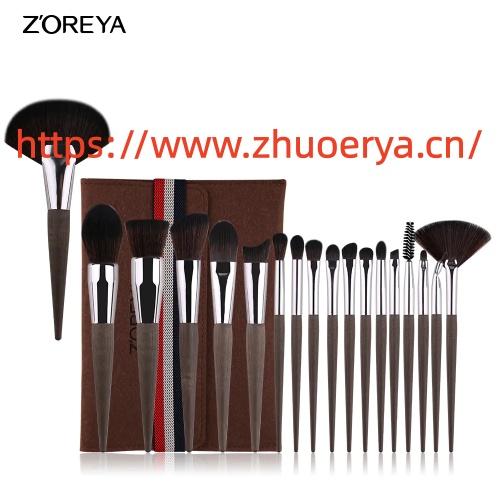
Makeup Brush Set Manufacturer selection involves more than finding a company that can produce cosmetic accessories. For beauty retailers, distributors, and emerging cosmetic brands, the manufacturing process influences product appearance, usability, customization, and market presentation. Understanding how different production stages work can help buyers make informed decisions when developing a new collection. From the initial design concept to final packaging, each stage deserves attention.
Product development often begins with understanding the intended application. Different cosmetic techniques require different brush head shapes, fiber arrangements, and levels of flexibility. Broad, rounded heads are commonly associated with complexion application, while angled designs can help users work around facial contours. Smaller shapes offer greater control for detailed cosmetic work. Manufacturers need to understand these intended uses before recommending suitable product combinations.
Fiber processing is an important part of production. Synthetic fibers are widely used in cosmetic accessories because they offer flexibility in texture, shape, and application characteristics. Different fiber structures can create different levels of softness and product pickup. Buyers should consider how the selected materials interact with the cosmetic formulas used by their target customers. Material consistency and appropriate finishing also contribute to the overall user experience.
Assembly requires attention to the relationship between the fiber head, connector, and handle. The fibers need to be arranged and secured according to the intended design. The metal connector holds the head in position, while the handle provides support during application. Consistent assembly helps create a coordinated appearance throughout a collection. Buyers can review samples to evaluate fiber distribution, attachment quality, surface finishing, and handling comfort.
Handle production offers another area for creative development. Different materials create different visual impressions and practical characteristics. Wooden handles can introduce a natural appearance, while plastic handles allow manufacturers to work with different colors, shapes, and surface treatments. Metallic finishes, soft matte coatings, and decorative patterns can also contribute to a recognizable product style.
Color coordination is particularly relevant for businesses developing their own cosmetic collections. A consistent palette can connect individual products with packaging and other retail materials. Some brands prefer neutral colors that suit different customer preferences, while others choose distinctive combinations to communicate a particular visual identity. Manufacturers can discuss available finishing approaches and help buyers evaluate how different design elements work together.
Production planning also involves understanding the needs of different sales channels. Products intended for beauty retailers may require coordinated packaging and clear product identification. Professional distributors may prioritize functional assortment combinations that support different application techniques. Online businesses may pay closer attention to visual presentation because product photography plays an important role in communicating product details to potential customers.
Packaging development should not be treated as an afterthought. A suitable package protects individual components while helping customers understand the product collection. Storage pouches, presentation boxes, and organized internal compartments offer different advantages depending on the intended market. Businesses can consider the opening experience, portability, product arrangement, and visual consistency when selecting a packaging concept.
Quality evaluation is another essential part of the manufacturing relationship. Buyers can request samples to examine the appearance and handling of finished products before moving forward with larger purchasing plans. They can review fiber attachment, handle surfaces, connector finishing, packaging details, and overall consistency. Clear communication during sample evaluation helps reduce misunderstandings and gives both parties a shared understanding of the expected product direction.
A reliable development process also depends on communication. Buyers should provide clear design references, intended applications, preferred materials, artwork files, and packaging requirements. Manufacturers can then assess the project and discuss feasible production arrangements. Regular feedback throughout development helps ensure that adjustments are addressed before the final product is prepared.
Z'OREYA works with cosmetic accessory products and provides options for businesses considering different product styles and customization requirements. Its product range allows buyers to consider various fiber designs, handle appearances, coordinated collections, and packaging possibilities. These options can support businesses developing retail assortments, professional cosmetic collections, or customized product lines for their intended customer groups.
Selecting a production partner is ultimately a process of matching manufacturing capabilities with business objectives. Buyers should consider product development communication, material choices, sample evaluation, finishing methods, and packaging coordination rather than focusing on appearance alone. A well planned process can help businesses build collections that reflect their market positioning and customer expectations. Companies interested in reviewing cosmetic accessory options and discussing potential product directions can visit https://www.zhuoerya.cn/product/ to view the Z'OREYA range and consider suitable choices for their upcoming collections.

 English
 Arabic
 Spanish
 Portuguese
 Deutsch
 Turkish
 Dutch
 Italiano
 Russian
 Romaian
 Portuguese (Brazil)
 Greek
