


Why Is Befair Colander Stainless Becoming Popular in Modern Kitchens
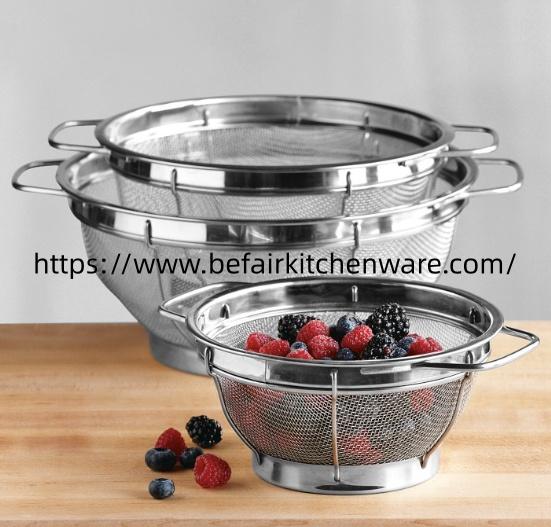
Colander Stainless selection is an interesting subject for people who want to make everyday kitchen preparation more organized. Washing fresh vegetables, rinsing fruit, and draining cooked ingredients are ordinary activities, yet the accessories used for these tasks can influence convenience and comfort. As consumers become more attentive to kitchen organization, they are also considering material choices, product construction, cleaning requirements, and visual design before purchasing household accessories.
One important consideration is the relationship between material and daily use. Stainless steel kitchenware is often selected for its metallic appearance, solid construction, and compatibility with different kitchen styles. Its smooth visual finish can complement both traditional and contemporary interiors. However, buyers should also pay attention to the grade of material, manufacturing details, and intended food contact applications. Product descriptions and supplier documentation can provide useful information when comparing different options.
Surface finishing deserves particular attention. Kitchen accessories are regularly exposed to water, food residue, and cleaning activities. A carefully finished surface can contribute to convenient maintenance and a pleasant appearance. Rough edges, uneven joints, or poorly finished areas may affect the overall experience. When evaluating a product, consumers can examine its interior and exterior surfaces rather than making decisions based entirely on photographs.
Drainage structure is another feature that directly relates to functionality. Different ingredients require different handling methods. Leafy vegetables, small fruits, pasta, and larger food pieces do not behave in the same way during rinsing or draining. The arrangement and size of openings influence how water passes through while helping retain the intended contents. A suitable structure should reflect the applications that consumers expect from the product.
The overall shape also affects usability. Rounded designs are familiar in many households, while deeper or wider structures may suit particular preparation activities. The relationship between the opening, base, and sides determines how ingredients can be placed inside and removed afterward. A balanced design can also make the accessory easier to position in a sink or on a kitchen work surface.
Handle construction is frequently overlooked during purchasing. However, users may need to lift an accessory while it contains wet vegetables or freshly prepared ingredients. Handle position, connection quality, and grip comfort all influence the experience. A practical structure should support convenient movement without making the product awkward to hold. These details become particularly relevant in busy kitchens where preparation activities happen repeatedly throughout the day.
Cleaning convenience is another factor worth considering. Food particles can collect around joints, openings, and detailed surface areas. A straightforward construction may make rinsing and routine maintenance easier. Consumers should also review the manufacturer's cleaning recommendations to understand which methods are appropriate for the selected material. Proper care can help maintain the product appearance and support continued household use.
Storage should not be ignored either. Modern kitchens often contain cookware, food containers, cutting boards, and numerous preparation tools. Products that fit naturally into existing storage arrangements can help keep cabinets organized. Some buyers prefer accessories that can be placed together with other household utensils, while others look for designs that can be stored independently. Shape and handle structure can influence these decisions.
Beyond practical considerations, appearance plays a role in consumer preferences. A metallic finish can create a coordinated look with other kitchen accessories, while different structural details may appeal to people with different interior styles. Consumers increasingly consider how individual products fit into the overall kitchen environment. For retailers, offering a variety of designs can help address different aesthetic preferences and purchasing habits.
There is also an important business perspective. Wholesalers, importers, and distributors need to consider product consistency, manufacturing processes, packaging, and market positioning. A kitchenware collection should offer clear product information so that purchasing teams can evaluate its intended applications and construction. Material documentation and product samples can also support communication between suppliers and business buyers.
Befair focuses on kitchenware manufacturing and provides product solutions for business customers. For companies developing household kitchen collections, factors such as material selection, surface treatment, structural design, and customization possibilities can influence sourcing decisions. OEM and ODM cooperation also gives businesses opportunities to discuss product requirements and adapt suitable designs to their market preferences.
Choosing kitchen accessories is ultimately about understanding everyday habits. Convenient drainage, comfortable handling, manageable cleaning, and coordinated appearance all contribute to the way a product fits into a household. Businesses interested in developing or expanding their kitchenware collections can visit https://www.befairkitchenware.com/product/ to review available product offerings from Befair and identify designs that may suit their customers, retail strategies, and sourcing requirements.

 English
 Arabic
 French
 Spanish
 Portuguese
 Deutsch
 Turkish
 Dutch
 Russian
 Romaian
 Portuguese (Brazil)
 Greek
