


Learning Machines Find Work in Warehouses, Wards and Homes
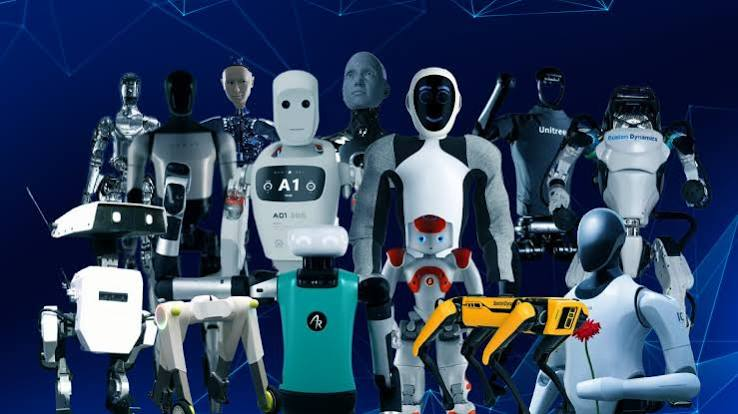
Artificial intelligence robots combine machine learning, computer vision, natural language processing, motion planning and control algorithms, context awareness, localisation, mapping and simultaneous localisation and mapping. They appear as industrial robots and service robots, deployed through cloud-based and on-premises systems for logistics, healthcare, personal assistance, security, education, agriculture, hazardous environments and automobiles.
A recent study by Markntel Advisor highlights that the global artificial intelligence robots outlook was valued at USD 7.38 billion in 2025 and is projected to reach USD 57.46 billion by 2032, registering a CAGR of 34.07% during 2026–2032. Asia Pacific represented 44%, while hardware held 65% in 2025.
Asia-Pacific Takes the Lead as Robot Hardware Holds Strongest Share
Asia Pacific leads the global artificial intelligence robots outlook with a dominant share of 44%, while China emerges as the fastest-growing major country, projected to expand at a robust 45.19% compound annual growth rate during 2026–2032. Japan updated its national robotics strategy with approximately USD 215 million for artificial intelligence-driven robotics research, expanding autonomous systems across industries in the region.
Hardware represents 65% of the global artificial intelligence robots sector in 2025, reflecting the capital-intensive nature of intelligent robotic systems. Each unit needs processors, vision systems, sensors, actuators, motors, batteries and precision mechanical structures, unlike software that can be replicated at low marginal cost. Hardware therefore remains the primary cost driver across production and deployment.
Care Robots Offer Daily Help Beyond Factories and Hospitals
Personal assistance and caregiving represents 25% of the global artificial intelligence robots sector in 2025, making it a major application alongside logistics, healthcare, security and education. Growth is driven by rapid ageing populations, chronic caregiver shortages and rising demand for independent living solutions among elderly and differently abled people in many countries.
Assistive robots are increasingly deployed for mobility support, medication reminders, companionship, fall detection and daily task assistance in homes and care settings each day. These uses require perception, navigation and autonomous decision-making in unstructured environments, where machines must respond safely and reliably to people rather than follow fixed paths on a factory floor.
Stronger Computing and Public Backing Sharpen Robot Intelligence
Expanding artificial intelligence computing infrastructure is a decisive driver for intelligent robots, because governments are investing in high-performance computing that enhances autonomy, adaptability and real-time perception. A planned supercomputer in Mexico is projected to exceed 314 petaflops, strengthening national research capacity for complex machine-learning models used in manufacturing, logistics and urban services.
In Europe, the launch of GenAI4EU under Horizon Europe commits nearly USD 740 million to accelerate generative and multimodal artificial intelligence systems for natural language interaction, visual reasoning and adaptive learning. European research on general-purpose AI seeks robust, adaptive systems that can adjust to changing conditions and tackle complex, real-world challenges across robotics and other fields.
Humanoid Helpers Move Beyond Single Tasks Toward General Assistance
Humanoid and general-purpose robots are reshaping the global artificial intelligence robots sector, supported by government backing and advances in embedded artificial intelligence. Nations increasingly view humanoid robotics as strategic infrastructure to offset labour shortages and enhance productivity across industrial and service environments in factories, warehouses and hospitals, rather than as a narrow research curiosity.
Public procurement of humanoid robots in China increased from USD 0.03 million in 2023 to USD 1.4 million in 2024, while central and provincial authorities allocated more than USD 20 billion in subsidies and established an approximate USD 137 billion robotics fund. A 2025 alliance in South Korea targets a shared artificial intelligence system for humanoids by 2028, enabling machines capable of lifting heavy loads and performing complex tasks.
Cost Barriers Keep Advanced Robots Out of Reach for Many Buyers
High development and deployment costs remain a significant challenge, because turning sophisticated prototypes into commercially viable machines needs specialised hardware and low production volumes. Advanced humanoid robots typically cost between approximately USD 50,000 and USD 400,000 per unit, significantly higher than many industrial robots priced below USD 30,000, because they need multiple sensors, high-performance processors and precision components.
Costs also arise from engineering integration, testing, maintenance, safety certification and software development, making short-term returns harder to justify for budget-constrained organisations. Components such as LiDAR and depth cameras can individually run into thousands of dollars, while industry statistics on factory robots show sustained installation volumes across Asia, Europe and the Americas in recent years.

 English
 Arabic
 French
 Spanish
 Portuguese
 Deutsch
 Turkish
 Dutch
 Italiano
 Russian
 Romaian
 Greek
